CMS website development in Dubai: WordPress, Drupal, headless or custom
The right content management system makes publishing easy for years; the wrong one turns every new page into a support ticket. NetSoft helps companies in Dubai choose between WordPress, Drupal, Craft CMS, Strapi, a headless set-up or a custom CMS, then builds the site so your team can edit Arabic and English content without a developer.
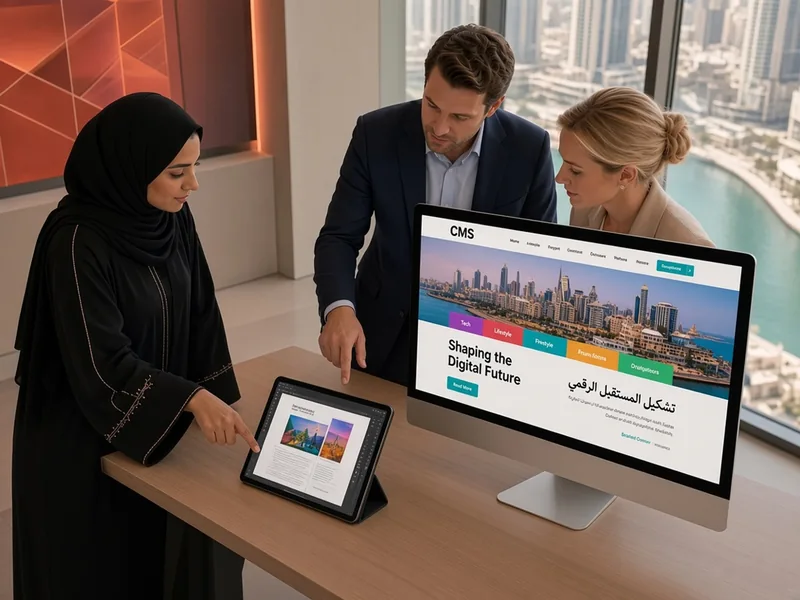
Bespoke CMS development for Dubai businesses
We choose the CMS around your content, workflow and growth plans, not the other way round. This page explains when each platform fits, what it costs to run over time and what moving from one CMS to another involves. Projects typically take 3 to 6 weeks.
Strategy + Engineering + Testing = A Website Your Team Can Run
Which CMS fits your website
Each platform below is one we build on. The short version of when each one makes sense:
WordPress
The practical choice for most company websites, blogs and content-led sites, with a large ecosystem and editors that most staff learn quickly. Custom themes, plugins and editing screens are covered on our WordPress development page, and stores on WooCommerce development.
Drupal
Suited to large, structured sites with many content types, detailed user permissions and several editorial teams, such as institutions, education and large corporate sites.
Craft CMS
A strong fit for design-led marketing sites where editors want clean, structured fields and full control of layout, without a long list of third-party plugins.
Strapi
An open-source headless CMS that stores content once and serves it through an API to a website, a mobile app or other channels. It suits teams that already plan a separate front end or a mobile app.
Headless set-ups
The CMS manages content only, and the website is built separately, for example in a JavaScript framework. Headless makes sense when the same content feeds several sites, apps or screens, and is usually more than a standard company site needs.
Custom CMS
Worth it only when your content and workflow are genuinely unusual and no existing platform models them cleanly. We build these as applications; see back-end development and Laravel development.
Arabic, English and right-to-left in each CMS
Bilingual publishing is where CMS choice shows quickly in the UAE: a platform that handles English well can still make Arabic pages awkward to manage.
We plan the language set-up per platform. In practice that means:
- WordPress handles Arabic and English through multilingual plugins such as Polylang or WPML, with each page linked to its translation.
- Drupal includes multilingual features in its core, which suits large sites with many translated content types.
- Craft CMS manages languages as separate sites sharing one content structure, so Arabic and English can differ where needed.
- Strapi and headless set-ups store each language as its own version of the content; right-to-left layout is then handled by the front end.
- On every platform, we test right-to-left layouts, Arabic fonts, mixed Arabic and English text, and language switching before launch.
More on this on our bilingual website design page.
Editor experience: what your team will use every day
Your editors live in the CMS long after the build team has moved on, so we design for them first:
- Page types and fields built around your content, so editors fill in clear boxes rather than wrestling with layouts.
- Roles and approval steps, so drafts can be reviewed before they go live.
- Arabic and English side by side, with a clear view of which pages still need a translation.
- Previews that show how a page will look before it is published.
- A short training session and written notes for your team at handover.
What a CMS costs to own
The build is only part of the cost. Over the life of the site, these are the items that differ between platforms:
- Licences: WordPress, Drupal and Strapi are open source; Craft CMS has a free edition and paid editions for larger needs.
- Premium plugins or modules, renewed yearly in your company’s name.
- Hosting, which ranges from standard managed hosting to separate hosting for a headless front end and its CMS.
- Updates and security, which every platform needs; the effort depends on how many add-ons are installed.
- Developer availability: WordPress skills are easy to find; Drupal, Craft and custom CMS work needs more specialised developers.
- Future changes, which are cheaper on a well-structured build than on one assembled from many plugins.
Every CMS website is quoted in writing, with the build, licences and running costs listed separately.
Hosting needs by platform
Different CMSs ask different things of the server:
- WordPress and Craft CMS run well on PHP and MySQL hosting tuned for caching.
- Drupal benefits from more memory and careful caching on large sites.
- Strapi runs on Node.js and needs a server or cloud service set up for it.
- Headless set-ups usually need two environments: one for the CMS and one for the front end.
- Every platform needs SSL, backups and a staging copy for testing updates, and fast hosting matters for search too; see our website speed guide.
We set this up through our managed web hosting, and ongoing updates through website maintenance.
Moving from one CMS to another
Many projects start with a site that has outgrown its CMS, for example an old Joomla site, a page builder that has become slow or a custom system nobody can update. A migration covers:
- Content mapping: each page, post and field is matched to its new home.
- URL planning and 301 redirects, so search rankings carry over.
- Media and documents, moved with file names and alt text intact.
- Arabic and English pairs, kept linked so each page still points to its translation.
- A side-by-side check of the old and new sites before the switch.
How we choose and build your CMS
Content and workflow review
We look at your content types, languages, editors and approval steps, and at any systems the site must connect to.
Platform recommendation
You get a written recommendation with the reasons, the running costs and the trade-offs of the alternatives.
Build and editor set-up
We build the theme or front end, the page types and fields, roles and both languages, then test for speed.
Training and launch
Your editors are trained on the finished site, content is checked, and the site goes live with backups in place.
Typical timelines
- Most CMS websites take 3 to 6 weeks.
- Migrations and headless builds are scheduled in your proposal.
- Large Drupal or custom CMS projects are planned in phases.
Who we build CMS websites for
Teams that publish often and need control over their own content:
- Corporate and professional firms with service pages, news and team profiles. See corporate and DIFC and consulting.
- Schools, universities and institutions with many departments and editors. See education.
- Clinics and healthcare groups that update doctors, services and branches. See healthcare.
- Real estate developers and agencies that publish projects and listings. See real estate.
- Hospitality and events businesses with frequent offers and seasonal pages. See hospitality.
- Non-profits and associations that run news, events and reports. See non-profits.
Why NetSoft for CMS development
- Custom editing screens: page types, fields and layouts built around your content, so editors never touch code.
- Bilingual publishing: Arabic and English managed side by side, with right-to-left layouts tested.
- Safe updates: staging, backups and version control so changes go live without breaking the site.
- An honest recommendation: if WordPress will do the job, we say so, even when a bigger platform is possible.
- In-house developers for WordPress, Drupal, Craft CMS, Strapi and custom builds.
- Set contact hours: Monday to Saturday between 9:00 and 18:00 GST, with a reply within one working day.
CMS platforms compared
A quick reference to the platforms on this page:
| Platform | Usually fits |
|---|---|
| WordPress | Company sites, blogs and content-led sites with a small editorial team |
| Drupal | Large structured sites with many content types, editors and permission levels |
| Craft CMS | Design-led marketing sites with structured fields |
| Strapi | Content served to a website and apps through an API |
| Headless | The same content shared across several sites, apps or screens |
| Custom CMS | Content and workflows no existing platform models cleanly |
We also maintain and migrate existing Joomla sites. The final recommendation comes after a review of your content and team.
Find the right CMS for your website
Tell us what your site publishes, who edits it and in which languages. We reply within one working day with a recommended platform and the next steps. NetSoft has worked with businesses across the UAE and GCC since 2005 and is based at Boulevard Plaza Tower 1, Level 9, Downtown Dubai; our office hours are Monday to Saturday, 9:00 to 18:00 GST, and support is 24/7. Call or send a WhatsApp to +971 50 219 4018, or email us at info@dubaiwebcity.com.